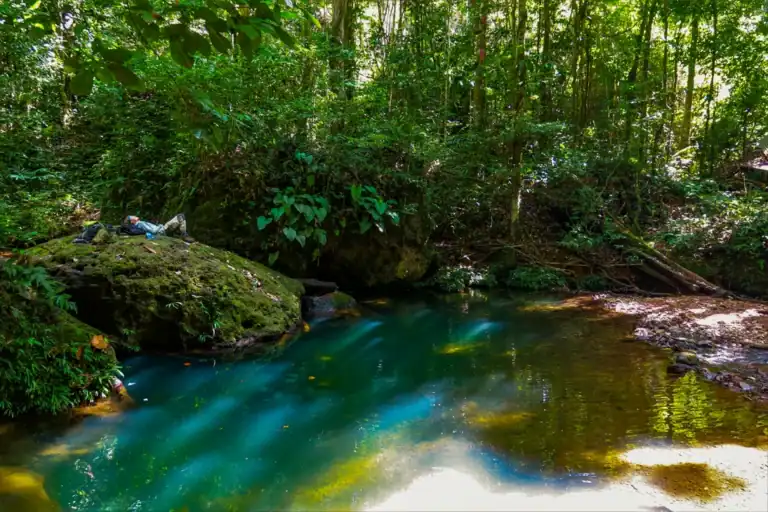
Brownsberg Jungle Nature Tour (Suriname)
Experience an unforgettable multi-day discovery tour in the Brownsberg Nature Park, a vast rainforest landscape on a plateau high above
The Brownsberg Nature Park — also called the Brownsberg Nature Park or Brownsberg Nature Reserve by Surinamese people — is the most famous nature reserve in the country and the most accessible introduction to the Surinamese rainforest. It is located on a bauxite plateau of about 500 meters altitude in the Brokopondo district, about 130 kilometers south of Paramaribo, and overlooks the immense Van Blommenstein Lake (officially the Prof. Dr. W.J. van Blommesteinmeer , popularly known as Brokopondo Lake), a hydropower reservoir that was built in the sixties for the bauxite industry.
Those who choose a Brownsberg day trip will experience the full breadth of Suriname’s natural wealth in one day: an adventurous hike on natural jungle trails, three iconic waterfalls — the Leo waterfall, the Irene waterfall and the Koemboe waterfalls on the Witi creek — and a flora and fauna that you will not see so concentrated anywhere else in this part of South America. Almost every tour is accompanied by a professional guide or local guide, booked through renowned tour operators such as Orange Travel and DMC Guianas. A private visit without a Surinamese guide is not recommended — not only because of orientation and safety on the jungle trails, but especially because a good wildlife guide will show you three times as much as you would notice.
Below you can read everything you need to plan your tour: accessibility, waterfalls routes, wildlife spotting, TICKET PRICES, what to bring, and how to cleverly combine Brownsberg with other Suriname highlights such as Bigi Pan, Kabalebo resort and Ston Island.
Experience an unforgettable multi-day discovery tour in the Brownsberg Nature Park, a vast rainforest landscape on a plateau high above
The Brownsberg Nature Reserve is located in the Brokopondo district, about a 2.5 to 3 hour drive from Paramaribo. The ride takes you via Paranam and Brownsweg, past the Afobaka Resort and the Afobaka Dam — the dam that was completed in 1964 and created the Brokopondo Lake . This artificial lake covers more than 1,500 km² of Tropical Rain forest , making it one of the largest hydropower reservoirs in the world. You drive past it on two sides and the view alone is worth a photo stop.
The last 12 kilometers to the top is an unpaved, sometimes steep forest road that is only passable with 4×4. You can rent your own transport, but most travelers book a Brownsberg day trip with tour operators such as Orange Travel or DMC Guianas — they arrange the transport, the Surinamese guide, lunch and breakfast, plenty of bottled water, and the paper ticket you need at the entrance of the park.
Brownsberg owes its remarkably flat top to millions of years of geological activity: it is a bauxite plateau, which explains why this area was historically interesting for mineral exploration and gold mining activity. Until well into the twentieth century, bauxite and gold were searched for on a small scale here. Today, the core area is under the protection of STINASU (Stichting Natuurbehoud Suriname) and industrial extraction is no longer allowed within the park boundaries — although gold mining activity unfortunately continues in the wider area of Brokopondo, something that many wildlife guides will explain to you along the way as one of the biggest threats to the ecosystem.
Because of the difference in altitude, Brownsberg combines two ecosystems: the lowland tropical rainforest at the foot and a thin cloud forest zone at the top. This transition creates a biodiversity that you rarely encounter in flat jungle parts of Suriname. Among biologists, Brownsberg is considered an ecological haven — a refuge where species survive that are under pressure elsewhere, precisely because of the combination of altitude, precipitation and the isolated location on the plateau.
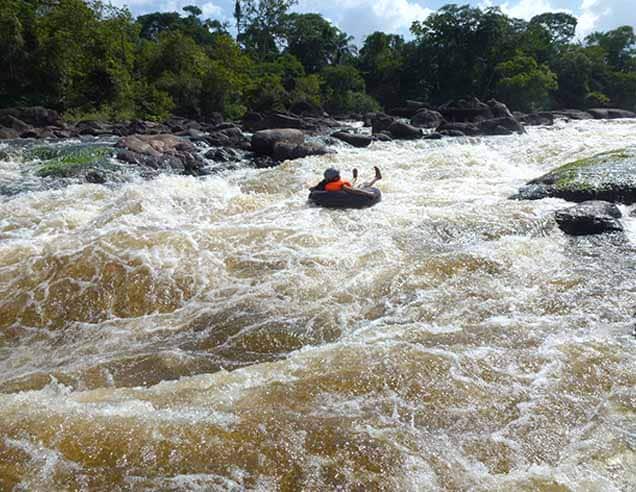
The Leo waterfall, the Irene waterfall and the Koemboe waterfalls are the heart of every Brownsberg day trip. Three waterfalls in one day is sporty but achievable — expect a total of 8 to 12 kilometers of hiking on natural jungle trails, with a lot of elevation gain.
The Leo waterfall is usually the first stop: a steep descent of about 45 minutes brings you to a wide, stepped fall where you can swim safely. The water is clear and cold — lovely after the descent.
The Irene waterfall is technically the toughest route: descending deeper, sometimes with the help of ropes and tree roots. Those who come down here will be rewarded with the most photogenic fall of the three and a deep natural pool.
The Koemboe waterfalls are located on the Witi creek and are slightly less steep to reach. This is where many groups have lunch — a sandwich lunch with fruit brought by your guide, next to the rushing water. How many waterfalls you do depends on season, group composition and condition. In the wet season, some routes may be temporarily closed.
Brownsberg is not a zoo — sometimes in six hours of walking you can “only” see tracks, sounds and silhouettes in the treetops. That is exactly the experience of a real Suriname rainforest visit. A good wildlife guide makes the difference between a green walk and a safari you won’t forget.
What you’re almost certain to hear and probably see are the howler monkeys — their howling calls carry for miles and are usually the very first thing you hear in the morning. With a bit of luck you will see a troop high in the crowns. Parrots, toucans and hummingbirds are also quite easy to see, as is the spectacular White Bell-Bird , famous for its metallic, bell-like call — one of the loudest bird sounds in the world. For those who look closely, there are poison dart frogs, giant ants and — if you’re lucky — sloths.
More hidden, but typical of the area, are Dipsas Copei (a nocturnal, sleep-eater snake that is rarely spotted by day-trippers) and Phyllomedusa Tomoptema, a spectacular tree frog that emerges at dusk. Tapirs and jaguars also live there, but are extremely shy — whoever sees them has an exceptional day. The combination of flora and fauna makes wildlife spotting in Brownsberg mainly a matter of patience, silence and a trained eye — which is why a professional guide is really indispensable.
A typical Brownsberg day trip looks like this: around 05:00–05:30 departure from Paramaribo (early, because most wildlife is active in the morning), arrival around 08:00 with briefing by your local guide and signing up with paper ticket at the entrance. Between 08:30 and 13:00 you will walk with descent to two or three waterfalls, followed by lunch at the viewpoint over Brokopondo Lake or at the Witi creek. This is followed by a short nature walk on the plateau with an optional viewpoint on the Van Blommenstein Lake, after which you drive back to Paramaribo between 16:00 and 19:00.
TICKET PRICES fluctuate, but for 2026 count on a day tour all-in between €40 and €65 per person. This usually includes: transport 4×4, breakfast and lunch, bottled water, park entrance and Surinamese guide. Not included: medical insurance (make sure you have travel insurance that covers outdoor activities), tips and own drinks.
What you bring: long pants against mosquitoes, hiking shoes with good grip, raincoat (also in dry season), swimwear, towel, dry bag for camera/phone, flashlight, mosquito repellent with DEET, sunscreen, and at least 2 liters of bottled water extra.
A day on the Brownsberg combines beautifully with an evening in Paramaribo — in fact, that is exactly what many travelers do. After the tour, grabbing a terrace at Sidewalkcafe ‘t Vat on the Kerkplein/Domineestraat is almost part of it: it is the place in the city to end the day with a Parbo and a rice table snack. For those who really want to dive into Surinamese culture , a Javanese restaurant in the Blauwgrond neighborhood provides authentic saoto soup and noodles that make Suriname’s Indonesian heritage tangible.
Brownsberg can be done in one day, but asks for additional destinations if you are in Suriname for a longer period of time. The combination Brownsberg – Afobaka Resort is popular with those who prefer to stay in the area for two days: you sleep at the Brokopondo Lake and have a quiet second day on the lake. An often-chosen extension is Brownsberg – Ston Island: a day trip by boat from Afobaka to Ston Island (Stone Island) in the lake, where headless rainforest tree trunks protrude from the water — a silent reminder of the sunken forest.
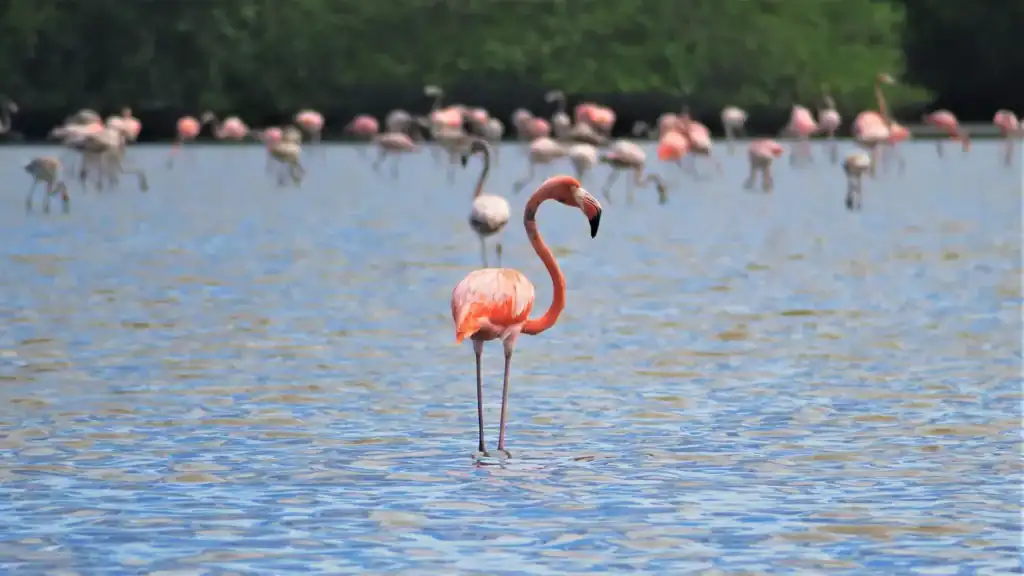
If you have more days, add Bigi Pan in the west (a totally different ecosystem with flamingos and ibises) and/or the deep Kabalebo resort in the southwest, where the chance of seeing tapir, jaguar and otters is the highest in all of Suriname.
Carefree arrival
Start and end your holiday in peace. Blue Bird Tours & Travel takes care of your personal airport transfer in Suriname directly from the airport (Zanderij) to your hotel, resort or apartment in Paramaribo. You can also count on our trusted taxi in Suriname for all your rides to local hotspots or the pick-up points of your tours, so that you always arrive at your destination comfortably and with air conditioning.
Brownsberg Nature Park (also Brownsberg Nature Park or Brownsberg Nature Reserve) is a protected nature reserve in the Brokopondo district of Suriname, located on a bauxite plateau of approximately 500 meters altitude. It covers some 12,000 hectares of tropical rainforest with a thin cloud forest zone at the top, and overlooks Van Blommenstein Lake.
By car it is 130 km / 2.5 to 3 hours drive via Paranam and Brownsweg, passing by the Afobaka Resort. The final ascent to the plateau requires 4×4. The easiest way is to book a Brownsberg day trip with tour operators such as Orange Travel or DMC Guianas — then transport, Surinamese guide and food are included.
For an all-in day tour are around €40–€65 per person, including transport, bottled water, lunch, park entrance (paper ticket) and local guide. Own transport with separate park entrance is cheaper, but for logistical reasons is rarely done without experience with Surinamese back roads.
The three iconic waterfalls are the Leo waterfall, the Irene waterfall and the Koemboe waterfalls on the Witi creek. Most tours do two in one day; All three is possible but requires a good condition and an early start.
For children from about 8–10 years old with a reasonable level of fitness, an adapted adventurous hike is fine — for example, just the Leo waterfall. Younger children or people with knee problems are better off doing the plateau walk with a view over Brokopondo Lake and skipping the descents. Always discuss this in advance with your local guide or operator.
Howler monkeys are almost certainly heard, often you also see them high in the crowns. There is also a chance of seeing sloths, parrots, toucans, the rare White Bell-Bird, poison dart frogs, and — with luck and a good wildlife guide — species such as the Dipsas Copei snake or the tree frog Phyllomedusa Tomoptema. Tapirs and jaguars live there, but rarely show themselves.
Highly recommended. A professional guide or local guide not only ensures safety on the natural jungle trails, but triples what you actually see in terms of flora and fauna. Operators such as Orange Travel and DMC Guianas offer experienced Surinamese guides who can explain both the ecosystem and the Surinamese culture .
Hiking shoes with grip, long pants, raincoat, swimwear, towel, at least 2 liters of extra bottled water, mosquito repellent with DEET, sunscreen, dry bag for your phone, flashlight and — very important — a valid travel and medical insurance that covers outdoor activities and assistance in remote areas.
Whether you dream of a private snorkeling tour, a surprise trip for a special occasion or just want to be completely unburdened, we will arrange it!
Together, we’ll put together a unique experience that perfectly suits your needs. Personalized, flexible and organized to perfection.